

Tech Diving Koh Chang – TDI Technical Training & HTMS Chang Wreck
Straight Talk on Technical Diving Koh Chang Thailand: realistic expectations, the HTMS Chang wreck, TDI courses & who this is for.
Koh Chang is not a top-tier global technical diving destination – and that can be exactly why it is one of the smartest places to begin your technical diving journey. This is Straight Talk: no ego marketing, no “deepest / toughest / most extreme” fiction – just how technical diving training actually fits this island, and what HTMS Chang does for real wreck and staged-decompression skills.
Reality check: why Koh Chang is not a “tec capital”
If your mental image of technical diving is endless 100 m walls, mine exploration, or constant 80–100 m exploration projects, Koh Chang is not pretending to be that. The Gulf of Thailand side around Koh Chang does not offer the same topography as some limestone / oceanic tec meccas. Depth is often limited compared to those marketing posters, and there are no vast cave systems for multi-stage cave curricula. “Exploration-grade” mixed-gas projects are not what this island sells.
Saying that out loud is good for everyone: you get accurate expectations, and we do not waste your time selling a fantasy. Clarity is trust.
- No reputation as a 100 m+ wall destination in the sense some tec hotspots have.
- Training depth band is often moderate – match profiles to reality.
- Complex cave systems: not the local selling point.
- “Extreme exploration” marketing: not what we build this article on.
The game changer: HTMS Chang
Here is the pivot: Thailand’s largest accessible wreck, sitting in roughly the 30 m range (main deck around 23 m, maximum on the wreck about 30 m), is a serious training asset. Depth is meaningful for staged decompression practice and gas planning without pretending you are on a 90 m trimix expedition. The structure is large enough to rehearse wreck protocols: line handling, team positioning, non-silly penetration discipline (only where your certification and plan allow – we do not encourage reckless swim- through ego dives).
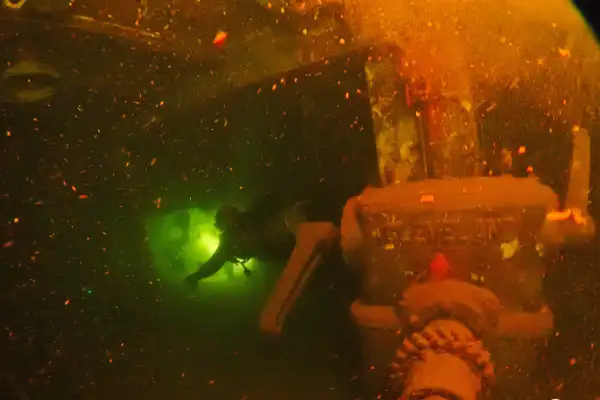
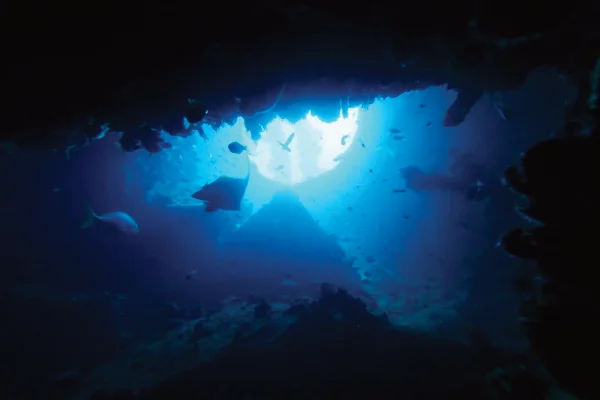
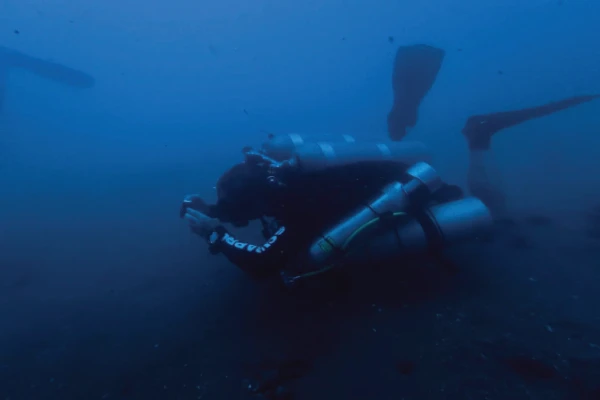
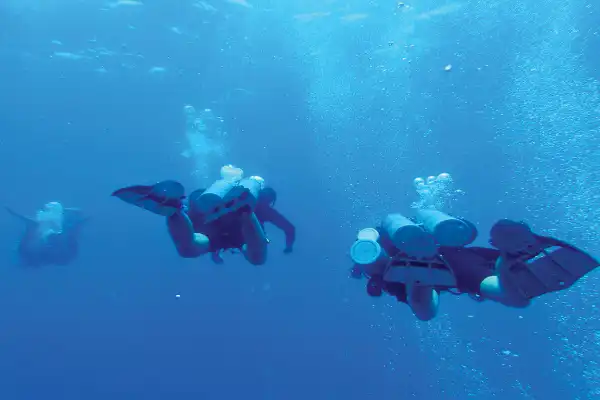
In plain language: you get real wreck context for skills that tec courses ask for – mooring approaches, situational awareness, task loading on a wreck that actually behaves like a wreck, not a pretend “pile of concrete blocks”.
Wreck penetration and what “qualified” means
On Koh Chang, technical diving training makes the strongest sense when it is tied to serious wreck work—especially penetration line work and team protocols that match what HTMS Chang actually demands. Advanced Nitrox and Decompression Procedures are foundational layers, but they are not a substitute for wreck-specific overhead training.
When we say wreck penetration in the full sense, we mean training aligned with TDI Advanced Wreck Diver (or another agency’s equivalent wreck-penetration program—not a generic “overhead” rating borrowed from an unrelated discipline).
Cave diving is not the same credential as wreck penetration. A Full Cave Diver, for example, is not automatically qualified for full wreck penetration: natural cave and human-made wreck environments differ in hazards, line tactics, and emergency logic, and the training is not interchangeable.
Technical diving courses in Koh Chang (TDI)
Our hub for this pathway is the technical diving courses overview. Typical building blocks people stack over time (pick what matches your logbook and goals – we help you sequence it safely):
- TDI Advanced Nitrox – gas planning for richer mixes and technical-style thinking.
- TDI Decompression Procedures – staged decompression skills that match modern practice.
- TDI Advanced Wreck – serious wreck protocols; minimum experience requirements apply (see below).
Many guests bundle progression into structured timelines; see our Technical Diver package if you want a coherent multi-course arc instead of random one-off pieces. For recreational divers who are not yet on the full tec ladder, the Deep + Wreck + Nitrox combo is often the realistic bridge toward deeper and more complex dives around Koh Chang.
Operational reality at our center: small groups, boat-based days on sites that fit the weather, and training that is paced for skill quality – not for “tick the card in two days” drama.
Requirements for technical diving training
Exact prerequisites depend on the specific TDI program; your instructor validates them against agency standards and your logbook. Use this as a planning checklist:
- Minimum age: 18.
- Baseline certification: Advanced Open Water or equivalent (course-specific rules apply).
- Experience: often 25 logged dives as a common entry band for advanced technical entry – plus depth- appropriate comfort.
- Advanced Wreck-style programs: often around 50 logged dives and appropriate wreck / deep foundations – confirm on the course page.
- Buoyancy & basics: controlled trim, clean propulsion, awareness – non-negotiable before adding stages, shutdowns, and team protocols.
Beyond recreational diving: mindset, teams, and “elite” done honestly
Technical diver training is not recreational diving with more cylinders and a new plastic card. It is a different workload: heavier academics, explicit failure planning, and skills that only make sense when you already dive well – clean buoyancy, staged thinking, and a logbook that shows you can execute normal dives without drama. Participants are expected to show up with solid baseline knowledge; the course extends it into decompression theory, richer gas strategies, and structured problem-solving – during class and in the habit of reading and refreshing afterward.
Many people pursue technical pathways because they want to belong to the global community of serious sport divers who treat complexity with respect – not because they need a flex for social media. When we say “elite” here, we mean training depth and professionalism: divers who engage seriously with decompression models, redundancy, gas matching, and rehearsal until the boring stuff is automatic. That is a different ambition than collecting recreational specialties for a wall of patches.
Certification is earned, not purchased. Technical courses are not like many beginner programs where showing up and completing the schedule usually leads to a card. Course fees and attendance do not guarantee certification. Instructors sign off when you meet agency standards in performance and judgment: beyond theory and core skills, that includes team communication, situational awareness, discipline under load, and consistent conduct in realistic training dives. Most well-prepared divers reach the standard; if you are not there yet, the professional answer may be more coaching dives, skill refresh, or continuing another time – which protects you, your teammates, and the meaning of the certification itself. See also the FAQ on certification guarantees.
Important expectation: earning a technical certification does not mean you must forever run long, complex decompression dives on holiday. Plenty of well-trained tech divers spend most of their time on simple recreational profiles; the payoff is that they bring sharper gas awareness, calmer execution, and stronger protocols to every dive – including easy ones. A good tech graduate is often, above all, an exceptionally competent diver who spots small failures early, supports a buddy under load, and stays methodical when something goes wrong.
Technical diving is team-based. Briefings, positioning, gas matching, and emergency drills are built around the team – not lone wolves. That culture is why we say this plainly: technical diving is not for underwater cowboys – no improvised “I’ll wing it” profiles, no silent heroics, no ignoring the plan because the sea looks calm. If that sounds restrictive, good: the restriction is what keeps people alive when the water stops cooperating.
Why start your technical diving journey in Koh Chang?
Because foundations beat bragging rights. Koh Chang offers controlled-scale learning: fewer “tec circus” crowds than some world-famous destinations, space to repeat skills until they are clean, and honest coaching that matches the environment you actually have – including regularly diving the same meaningful wreck so procedures become habit, not a one-off holiday story.
- Less scene pressure than oversubscribed tec hotspots.
- Conditions often allow repetition and coaching quality over ego.
- Personal attention in small groups – you are not anonymous on the bench.
- Fits divers who want competence first, ego last.
Who is this for?
- Divers who want team-based, theory-heavy training – not ego trips or “underwater cowboy” shortcuts (see mindset above).
- Recreational divers moving deliberately toward technical programs.
- Divers preparing for deeper or more complex environments elsewhere later.
- Wreck-focused divers who want procedures, not just photos.
- Anyone who prefers honest scope-setting before spending money and vacation time.
Honest conclusion
If you want extreme deep exploration as your primary identity, Koh Chang is not the global shorthand for that fantasy list. If you want a solid technical foundation in a measured environment – including one of Thailand’s most significant wrecks for training context – Koh Chang can be an excellent place to start.
Related pages (internal links)
- Technical diver stories – student interviews on the combined TDI path (Advanced Nitrox, Decompression Procedures, Advanced Wreck) and what training here actually feels like.
- Technical diving courses – TDI pathways, packages, and how we structure training on Koh Chang.
- HTMS Chang dive site – depth, orientation, what to expect.
- Deep Wreck Nitrox – popular recreational bridge toward more advanced profiles.
- Fun dives – boat diving days for certified divers; good add-on after skills sessions.
- Contact – dates, prerequisites, and honest scheduling for tech training.
FAQ
Is Koh Chang good for technical diving?
It is excellent for structured technical training and building procedures with realistic wreck context (notably HTMS Chang), not for marketing yourself as an “extreme exploration only” destination list.
Can I start technical diving in Thailand?
Yes – with the right prerequisites, a reputable center, and honest sequencing. Thailand offers strong logistics; your limits are always your certification, gas plan, environment, and team protocols – not a postcard slogan.
What is the depth of the HTMS Chang wreck?
The wreck is worked in a range suitable for advanced training: roughly 30 m maximum depth on the wreck, main deck around 23 m – used for advanced and wreck-oriented courses (verify your certification and the specific dive plan).
Which TDI courses can I do in Koh Chang?
At Chang Diving Center you can progress through the technical ladder described on our technical diving courses page – including Advanced Nitrox, Decompression Procedures, and Advanced Wreck, plus package options such as the Technical Diver package.
Does cave diving training qualify me for wreck penetration?
Not automatically. Cave and wreck penetration address different environments (natural vs. human-made structure) with different risk profiles and protocol sets. Full wreck penetration training here maps to TDI Advanced Wreck or an equivalent agency wreck program—not to cave diving alone.
Is certification guaranteed if I book and pay for a technical course?
No. Technical certifications are awarded when you meet agency standards in performance and judgment. Course fees and attendance alone do not guarantee certification. Beyond theory and core skills, instructors look at team communication, situational awareness, discipline, and consistent conduct in realistic training. If you are not yet at the standard, the professional answer may be additional coaching dives, skill refresh, or continuing another time – which protects you, your teammates, and what the certification is supposed to represent.
Does technical training mean I always have to do long decompression dives?
No. Certification prepares you for dives that need those skills when the plan calls for them; many trained technical divers still do mostly simple no-stop or light profiles in daily diving. The gain is deeper understanding, teamwork, and safer habits on every dive – not an obligation to run complex deco on every trip.
Is technical diving the same as recreational diving with more gear?
No. Agencies expect a strong recreational foundation first. Technical programs add theory (e.g. decompression planning), structured failure responses, and team-based protocols. It is a different learning load and mindset – not a cosmetic gear upgrade.
Book tec training or ask for a schedule
Email us with dates, certification, dive counts, and goals – we reply with realistic sequencing (and we will say no if you are not ready yet).
Custom packages and multi-week plans are possible – ask after we have your real numbers (dives, depth comfort, time on island).
More straight talk: Technical diver stories • Solo diving on Koh Chang • All Straight Talk posts