
Wreck Diving on the HTMS Chang, Koh Chang: Swim-Throughs, Penetration & Overhead – Where Is the Real Limit?
Wreck diving is often misunderstood. Many divers believe that if they can see light, it is automatically safe to enter. Others call every opening in a wreck a swim-through, even when it is already a real overhead environment.
This is where clear definitions matter. There is a big difference between a simple swim-through, limited wreck penetration in the light zone, and full wreck penetration requiring advanced overhead training.
We see many guests who want to go inside a wreck, not only around it. When we ask for a valid wreck certification (or equivalent) for penetration-style diving, a common reply we hear is: “I don’t have the card, but we did that in Egypt, the Philippines, on another liveaboard…” That is not about judging your past trips. It is about how a professional dive centre and its staff have to work: wreck penetration is only conducted when the training agency’s rules are met for both the diver and the professional. In practice, a Divemaster or Instructor may only lead those dives with divers who have the right certification for overhead / wreck work, and the professional must also be qualified to supervise or teach that environment under the same standards. If either side of that match is missing, a penetration is not run as a “legitimate” course or guided dive in the sense your certification body and insurance expect.
That matters beyond paperwork. If penetrations are done without that chain of training and authorisation, a serious accident always has major consequences for everyone involved: the dive operation, staff, and divers alike may face major issues with insurance, liability, and in certain countries even criminal law. Overhead diving without proper, structured preparation carries risks that are easy to underestimate. You can also run into weekend-style wreck instruction: an instructor with the right title on paper, but who may only run a wreck course a few times a year and simply does not have the specialist mileage that a serious overhead site deserves. A rare course now and then is not the same as living with a wreck’s layout, line plan, and day-to-day conditions. The standard we suggest is more practical than judgemental: train with professionals who are really at home on the wreck you are diving—on Koh Chang, that means a team that works the HTMS Chang often enough to read the hull, the line plan, boat logistics, and day-to-day conditions in the water—not a one-off guest spot. The sections that follow simply spell out the terms so you can align expectations, plan with your team, and stay inside limits that are there for everyone’s safety.
1. Swim-through – No Real Overhead Environment
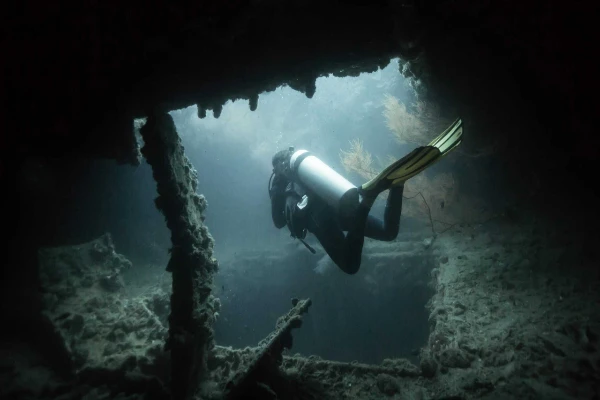
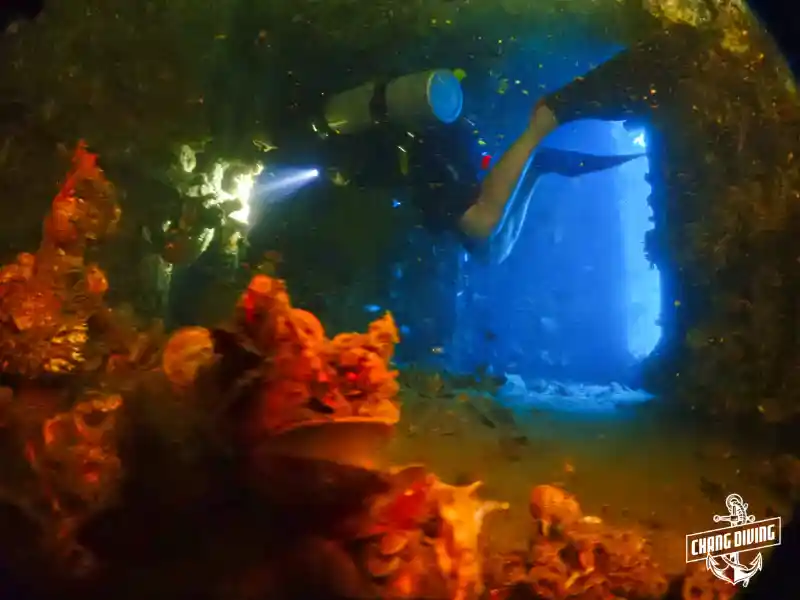
A swim-through is an open passage where a direct ascent to the surface is still possible at any time. There is no real overhead restriction, no complex navigation, and no need for a guideline.
- No real overhead environment
- Direct vertical ascent remains possible
- Natural light is clearly present
- Large openings with easy exit
- No guideline required
In simple words: a swim-through is not true wreck penetration. It is usually suitable for recreational divers when conditions, depth and supervision are appropriate.
2. Limited Wreck Penetration – Light Zone Recreational Diving
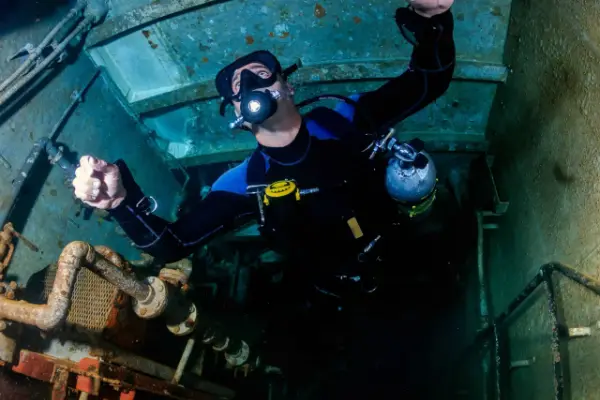
Limited wreck penetration means entering a wreck while staying inside the light zone. The exit must remain visible, daylight must be present, and the diver must remain within recreational limits.
But there is one important point many divers forget:
The diver’s maximum certification depth applies to the deepest point of the penetration – not only to the entrance.
This means limited penetration is controlled by two limits at the same time:
- Light zone: the exit remains visible and daylight is present.
- Certification depth: the total depth of the penetration must remain within the diver’s certified limit.
Example: HTMS Chang Wreck
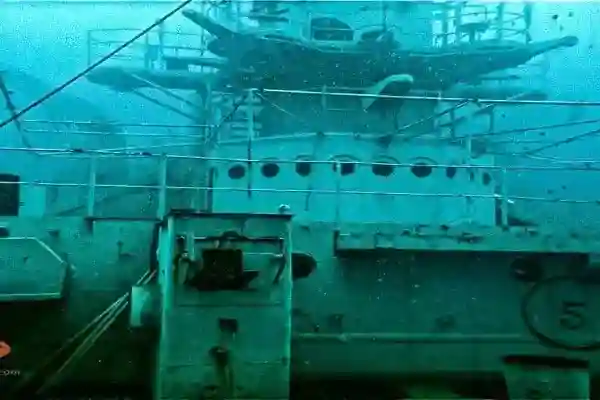
On the HTMS Chang wreck, this becomes very clear. An Open Water Diver with a wreck specialty is still limited to a maximum depth of 18 metres. If the entrance to a room, such as the radio room, is already around 19 metres, penetration is not possible within that certification limit.
An Advanced Open Water Diver with a 30 metre limit has more room to work with. If the entrance is at 19 metres and the diver enters 5 metres into the wreck, the dive may still remain inside the 30 metre recreational limit.
However, if the entrance to another area, such as the chart room or galley, is around 24 metres, only a very short penetration remains possible before reaching the 30 metre limit.
This is why limited penetration is often much more limited in real life than divers expect. Seeing light is not enough. Depth, training, gas, exit visibility and diver control all matter.
Why Deep + Wreck + Nitrox Makes Sense at HTMS Chang for Recreational Wreck Divers
For recreational divers who want to explore the HTMS Chang properly, a combined Deep, Wreck and Nitrox foundation usually makes the most sense—not as random one-off add-ons. If you want more context on how recreational depth actually behaves on wrecks before you stack specialties, our deep diving tips spell that out in plain language.
- Deep Diver: increases the recreational depth limit up to 40 metres.
- Wreck Diver: teaches wreck hazards, orientation and limited penetration procedures.
- Nitrox Diver: improves no-decompression planning and is ideal for repetitive wreck dives.
This stack is what our Deep, Wreck & Nitrox package is designed for at Chang Diving: it gives a recreational diver the best practical foundation for limited wreck exploration on the HTMS Chang while still staying within recreational diving limits. On the same page you will find format options, current pricing, and how we run it on Koh Chang.
3. Full Wreck Penetration – Advanced Overhead Diving
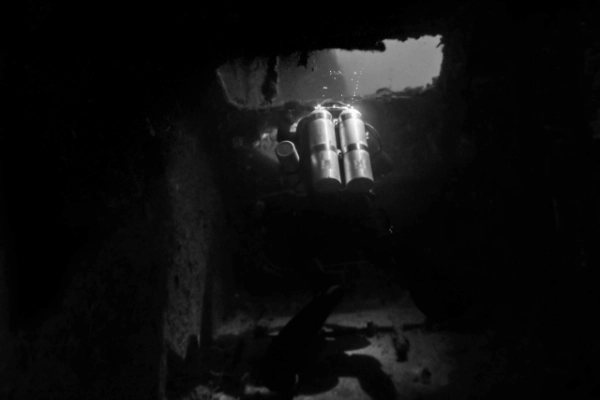
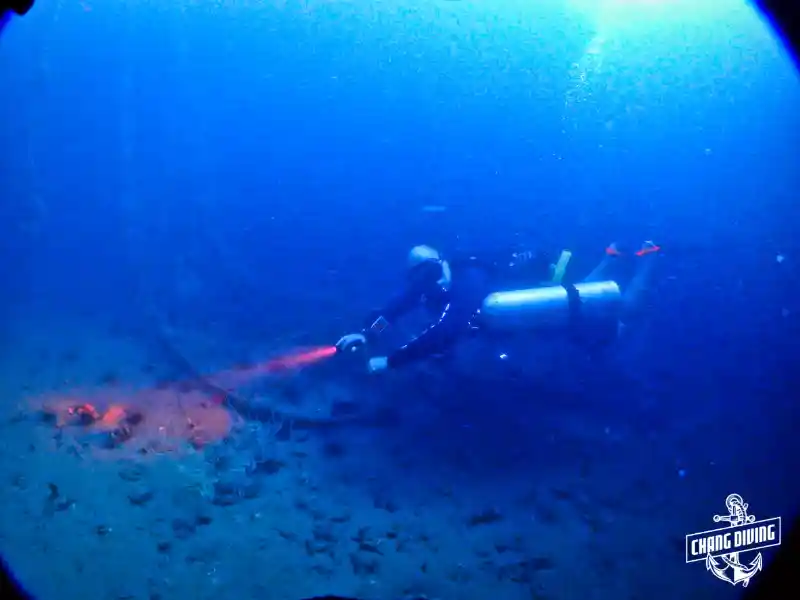
Full wreck penetration means entering a wreck beyond the light zone. The exit may no longer be visible, natural daylight may disappear, and the diver is now inside a true overhead environment.
- No direct ascent to the surface
- Exit may not be visible
- Natural light may be absent
- Guideline use is mandatory — reel & guideline guide
- Navigation and team procedures are required
- Gas planning becomes critical
This is no longer casual recreational sightseeing. It requires proper overhead training, redundant equipment, disciplined procedures and a clear exit strategy.
TDI Advanced Wreck Diver – When the Penetration Distance Limit Changes
The TDI Advanced Wreck Diver course can be completed by qualified recreational divers and changes one important limitation:
Advanced Wreck training removes the restriction to light-zone-only penetration, but it does not remove depth limits, gas limits or decompression limits.
In other words, a recreational diver trained in Advanced Wreck procedures may conduct wreck penetration beyond the light zone, but still only within the appropriate recreational depth, gas and no-decompression limits.
- Penetration distance is no longer limited to the visible light zone.
- A continuous guideline becomes mandatory.
- Line handling, markers, team communication and lost-line procedures are required.
- Depth and gas limits still apply.
- Decompression diving requires separate technical training.
This is the big difference between simply looking into a wreck and actually diving inside a wreck with the correct training.
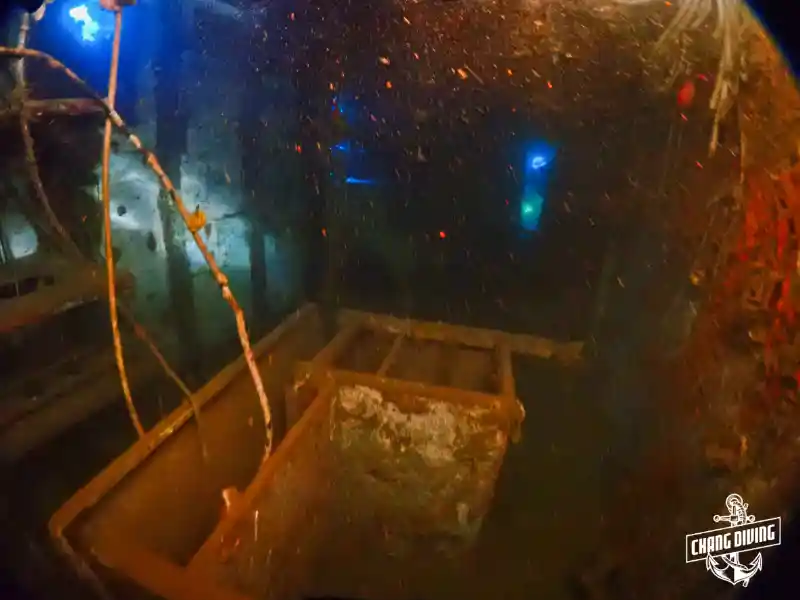
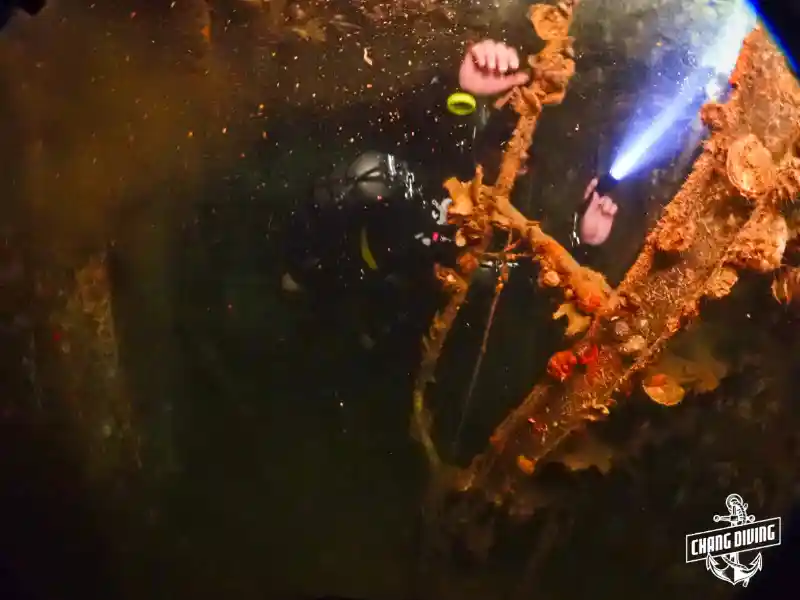
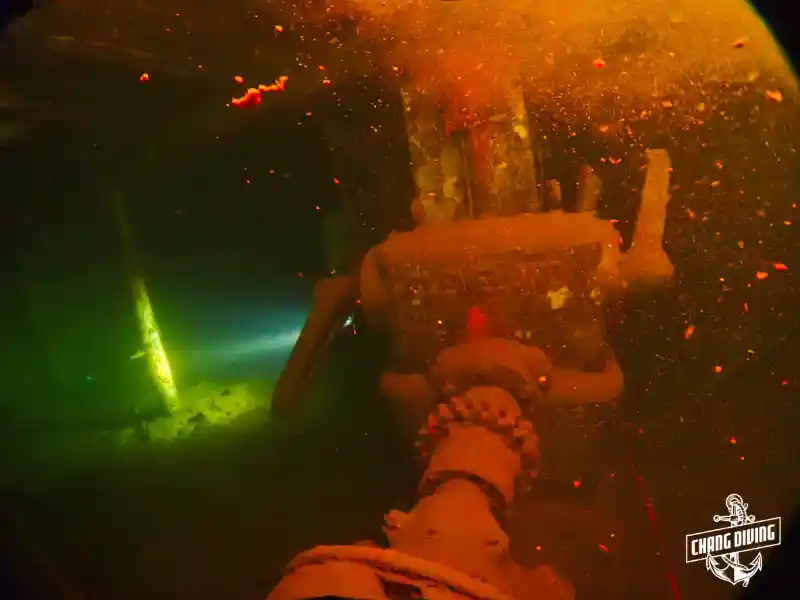
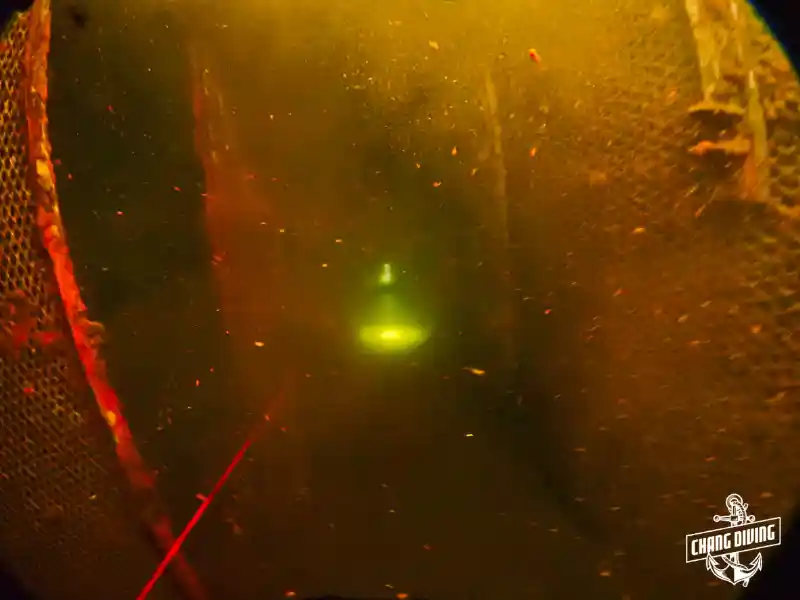
Straight Talk: Do Not Call Penetration a Swim-through
One of the biggest mistakes in wreck diving is using soft language for serious environments. If there is an overhead and you cannot ascend directly to the surface, it is not just a swim-through anymore.
Limited penetration is still penetration. Full penetration is advanced overhead diving. The wreck does not decide your limit – your training, depth rating, gas plan, equipment and awareness do.
At a Glance
| Type | Overhead | Exit visible | Guideline | Main limit |
|---|---|---|---|---|
| Swim-through | No real overhead | Yes | No | General dive limits |
| Limited wreck penetration | Yes | Yes | Usually no | Light zone + certification depth |
| Full wreck penetration | Yes | Not required | Yes | Training + gas + depth + procedures |
Final Thought
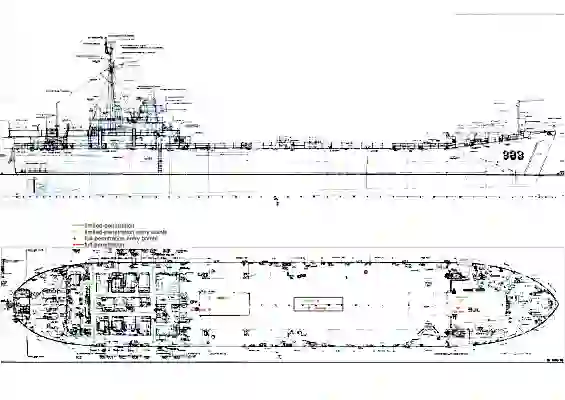
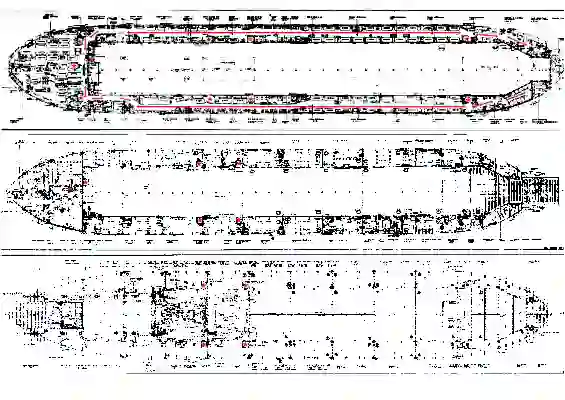
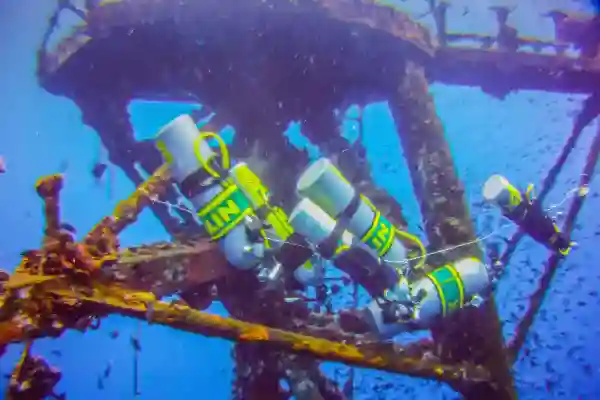
The HTMS Chang is one of the best wrecks in Thailand for learning this difference. It offers shallow external areas, limited penetration opportunities, deeper sections, and advanced overhead training potential – all on one wreck.
Many people first see this wreck on a Koh Chang fun-dive day trip, not in a course: you tour the outside of the hull, get a feel for boat flow and in-water conditions, and talk to the team about what your certification is actually set up for, before you add wreck training.
For recreational divers, the smartest path is not to rush inside. Build the correct foundation first: deep diving, wreck procedures, nitrox planning and controlled limited penetration. For divers who want to go beyond the light zone, Advanced Wreck training is the next serious step.
If you want to move from “looking into a wreck” to actually diving inside it safely, structured training is the key step.